

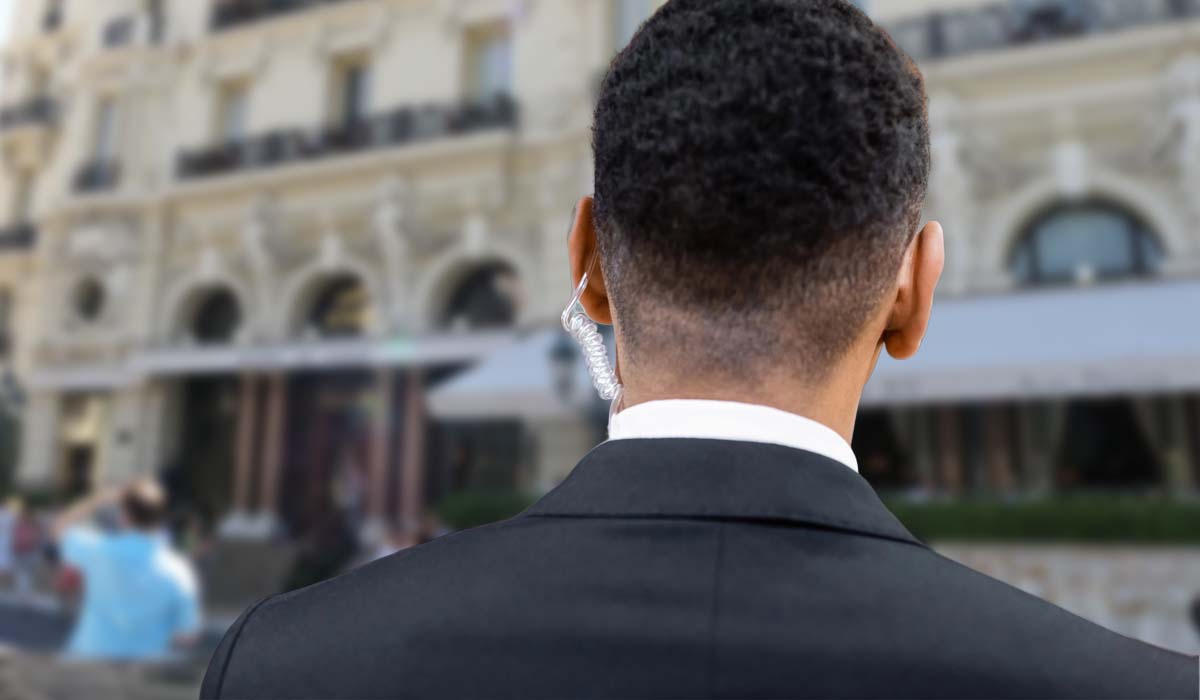
Close protection in Monaco: overcoming preconceived ideas
Close protection is often associated with spectacular images: visible bodyguards, high-tension movements, constant threats.
In Monaco, the reality is very different.
Close protection is a logical response preventive, discreet and proportionate. This is an environment where public safety is high, but where the personal, property and reputational stakes can be high.
The purpose of this article is to clarify :
- who is really concerned,
- what the specific risks are,
- and why close protection in Monaco is based above all on anticipation and discretion.
Who can benefit from close protection in Monaco?
A wider customer base than you might think
Contrary to popular belief, close protection in Monaco is not just for media personalities.
It is aimed in particular at :
- business and organisational leaders,
- residents with high asset exposure,
- international investors,
- families wishing to secure certain journeys,
- organisers or participants in sensitive events.
The decisive criterion is not name recognition, but the level of exposure.
One-off or ongoing situations
Close protection can be put in place:
- temporarily (travel, event, specific period),
- or on a more regular basis, depending on the context and changing risks.
In Monaco, demand is mainly one-off and targeted, away from the heavy, permanent systems.
What are the real risks in Monaco?
Risks that are often discreet but well identified
In Monaco, the risks are rarely violent or visible.
They are more often linked to :
- intrusion into the private sphere,
- excessive observation,
- intrusive behaviour,
- unwanted approach attempts,
- vulnerability when travelling.
The main aim of close protection is therefore to preserving tranquillity, rather than responding to proven threats.
Reputation and relationships
In an environment as exposed as Monaco, a minor incident can quickly :
- attract attention,
- generate interpretations,
- damage to image or reputation.
Close protection acts as a discreet bulwark. It's all about preventing harmless situations from becoming problematic.
The most common misconceptions about close protection
«Close protection is visible and intrusive».»
Not true.
In Monaco, effective protection is almost invisible.
Agents prefer :
- discreet postures,
- natural integration into the environment,
- a non-ostentatious presence.
«It is reserved for high-risk situations».»
Not true.
The majority of missions fall under the gentle prevention, without any direct threat.
«It limits freedom of movement».»
On the contrary.
Well thought-out protection aims to making travel more fluid, not to force them.
«It's an excessive solution for Monaco»
Not necessarily.
When it is proportionate, close protection is a tool for comfort, peace of mind and control of the environment.
How does professional close protection work in Monaco?
Preliminary analysis and assessment the context
Every serious mission starts with :
- an analysis of habits,
- travel studies,
- identification of sensitive areas,
- assessing the level of exposure.
This phase determines the accuracy of the system.
A discreet, adaptable approach
In Monaco, close protection is based on :
- constant vigilance,
- anticipating situations,
- the ability to intervene without attracting attention.
The strength of the system lies in its flexibility.
Close protection and Monaco's regulatory framework
Close protection is an activity strictly regulated in Monaco.
Agents must :
- be authorised,
- respect precise rules,
- act within a clear legal framework.
This guarantees effective protection that also respects people and the environment.
The boss private security approach: protection without exposure
At boss sécurité privée, close protection is designed as :
- a controlled presence,
- intelligent support,
- constant anticipation.
The aim is not to demonstrate safety, but to make it a reality, make you forget.
